

Your AC may be low on refrigerant if it’s blowing warm air, struggling to cool your home evenly, or showing signs of frost or hissing sounds. Low refrigerant (commonly called Freon) reduces cooling efficiency, raises energy bills, and can damage your system over time.
HVAC Freon, or R-22 (HCFC-22), is the chemical that absorbs heat from inside your home and releases it outdoors. Without the right amount, your air conditioner can’t cool properly – no matter how long it runs. Over time, this leads to poor comfort and can strain your compressor, ultimately shortening your AC’s lifespan.
In this guide, we’ll explain what refrigerant does, common causes of leaks, warning signs to watch for, and when to call a professional.Remember, refrigerants should only be handled by licensed HVAC professionals. If you suspect your system is low, call Anthem Air Conditioning & Plumbing at 760-895-2621. We are licensed by the CSLB under #1001659 to serve Coachella, California, and the surrounding areas.

Signs That Your AC Is Low on Freon
Below are signs your AC is low on Freon:
1. Persistent Warm Air
A key sign indicating low refrigerant levels is your AC blowing hot instead of cold air from the vents, despite setting the room temperature correctly. This happens because the system no longer has enough Freon to absorb and release heat effectively. However, the problem cannot be resolved by adding more Freon into the HVAC system without addressing the underlying leakages first.
2. Inconsistent Cooling Throughout the Home
Another sign of low refrigerant is some rooms in the home feel cold while others remain warm, even after adjusting thermostat settings. Uneven cooling often occurs when your AC struggles to evenly distribute conditioned air. While ductwork or insulation issues can also cause this, a professional HVAC inspection is the best way to identify the exact problem.
3. Frequent Cycling On And Off
Frequent cycling or the AC turning on and off more often than usual forces the system to work harder to maintain the set temperature, which increases wear on components and shortens the unit’s lifespan. It also leads to higher energy bills due to the constant power draw during repeated start-up cycles. While thermostat issues can cause similar behavior, low refrigerant is a common culprit and should be professionally checked.
4. Frost on Coils and Dripping Water
Low refrigerant can cause your AC’s evaporator coils to freeze. Without enough refrigerant, the system can’t absorb heat properly, leading to extremely cold coils. Moisture in the air then condenses and freezes on the surface. As the system cycles or shuts off, that frost melts, leading to visible dripping or puddles near the unit. Ice buildup reduces cooling performance and can cause further damage if not addressed promptly.
5. Hissing or Bubbling Noises From the Refrigerant Line
Hissing sounds near your indoor or outdoor AC unit often indicate a refrigerant leak. These noises occur when pressurized Freon escapes through cracks or pinholes in the refrigerant line. The volume of the hiss may vary depending on the leak size and your proximity to it. Any refrigerant leak is a serious issue and requires immediate attention from a licensed HVAC technician.
6. Higher Energy Bills Without a Comfort Increase
If your utility bills are climbing but your home still feels warm or unevenly cooled, your AC may be low on refrigerant. As refrigerant levels drop, your system runs longer and works harder to reach the set temperature, consuming more energy without delivering better comfort. This inefficiency adds unnecessary strain to your AC components and increases your monthly costs.
Key Takeaway:
Keep your cool. If rooms are warmer despite a lower thermostat setting, or you’re facing high electricity bills, low refrigerant might be the culprit. Check for leaks using soap and water on potential leak spots like joints or valves. Always identify your refrigerant type before checking levels to ensure proper handling and safety.
Why Low Refrigerant (Freon) Is a Big Problem?
As Freon cycles between liquid and gas, it should maintain a stable level, known as the refrigerant charge. However, Freon doesn’t get used up like fuel. If the level drops, it’s usually due to a leak. A low refrigerant charge can be an early warning sign of larger AC problems.
One of the most serious risks of low refrigerant is compressor damage, which happens when low refrigerant causes the evaporator coils to freeze. The ice buildup insulates the coils, slowing down the cooling process. As a result, the compressor has to work harder to maintain performance. This also puts extra strain on the motor, leading to overheating or failure of the HVAC system.
Key Takeaway:
Keep your AC running smoothly by knowing its refrigerant type, typically R22 or R410A. Use pressure gauges to check for low freon levels that could lead to higher electricity bills or ice buildup. A refrigerant slider can also provide accurate temperature readings based on current gauge values.
Common Causes of Low Refrigerant
Low refrigerant in your AC is almost always caused by a leak, especially in older systems. Here are the most common reasons this happens:
- Aging AC Components: As the compressor unit gets older, parts like the evaporator coils begin to wear down. Rust can form around the assembly joints, allowing Freon to escape as it flows through.
- Corrosion from Formic Acid: A naturally occurring acid called formic acid can develop on the outer surface of the evaporator coils. This acid creates pinholes in the tubing, allowing refrigerant to leak out gradually.
- Pinhole Leaks in Tubing: Even small pinholes in the refrigerant lines can lead to a significant drop in charge over time. These leaks are often difficult to detect without proper equipment.
- Higher Energy Consumption Over Time: As Freon leaks and the charge drops, your AC loses efficiency. It runs longer to cool the same space, driving up your energy bills without improving comfort.
Call 760-895-2621 if you suspect any of these issues for refrigerant leak detection and recharge service.

DIY Leak Detection Method
While refrigerant should only be handled by licensed HVAC professionals, homeowners can take a few safe steps to check for signs of low Freon before calling for service.
Below are safe DIY leak detection methods:
1. Identify Your AC’s Refrigerant Type
Before doing anything, determine which type of refrigerant your system uses. Typically, residential AC units use R22 or R410A. Look for the metal information plate on the exterior of the unit, often near the service valve. This label includes important details like the refrigerant type, model number, and serial number. If you can’t find it or aren’t sure, consult your unit’s user manual or contact a licensed HVAC technician.
2. Try the Soap and Water Test (Basic Leak Check)
For visible components such as refrigerant lines or service valves, apply a soap-and-water solution. If you see bubbles forming, it could indicate a leak. This is a basic method that may help detect obvious leaks, but it won’t catch hidden or internal ones.
3. Use Pressure Gauges (For Advanced Users)
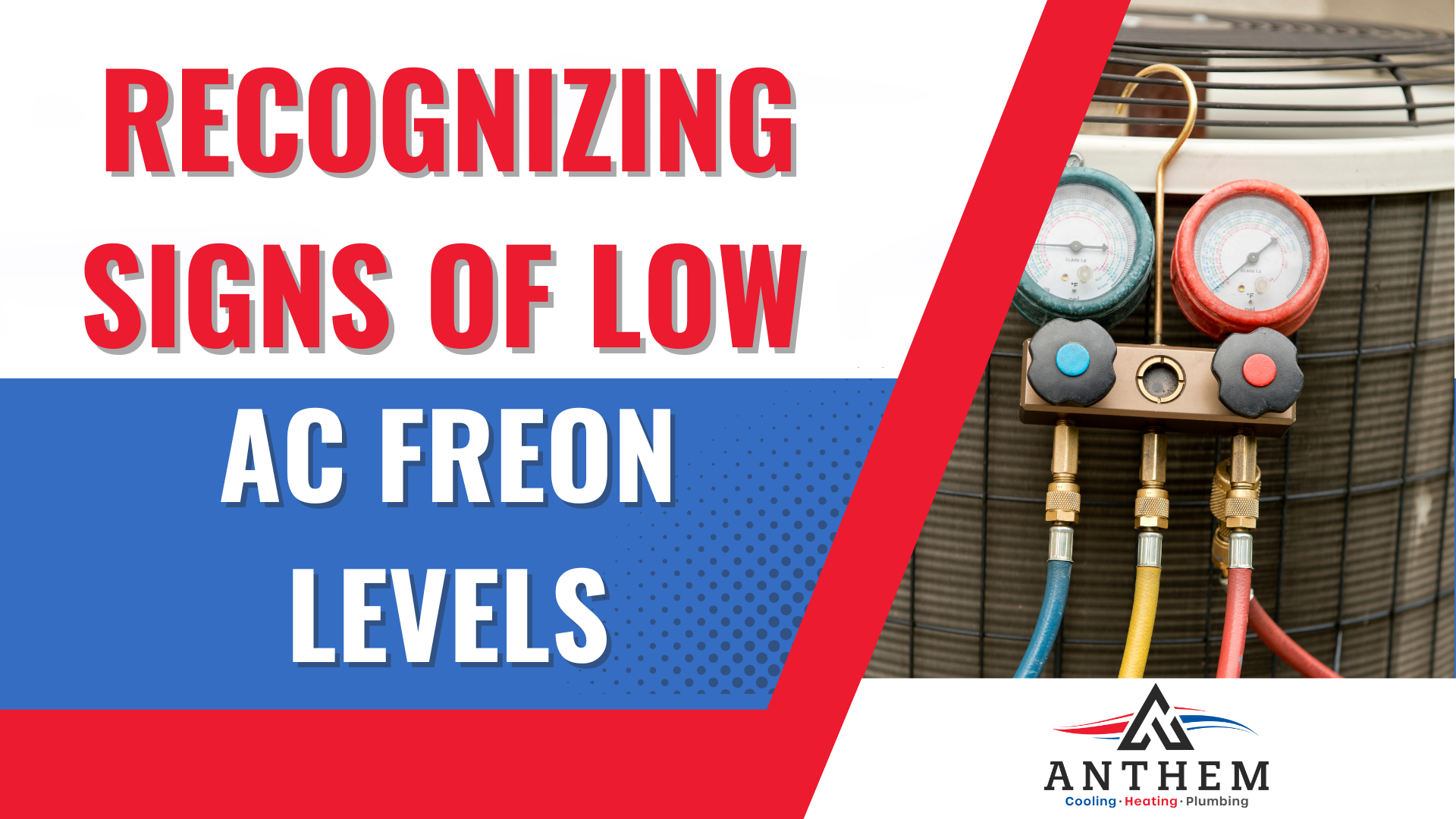
If you have HVAC experience or the proper tools, pressure gauges can help you evaluate refrigerant levels. These devices measure both the high-side (discharge) and low-side (suction) pressures while the system is running.
- Low pressure readings may indicate a low refrigerant charge.
- High pressure readings may indicate system blockages or overcharging.
Important: Using gauges incorrectly can be dangerous. Only proceed if you’re confident in your ability to do so safely.
4. Use a Refrigerant Slider (Optional Tool)
Refrigerant sliders (used mainly by HVAC technicians) can help interpret pressure gauge readings accurately. They calculate evaporation and condensation temperatures for your specific refrigerant type. Tools like these work best when you also understand subcooling and superheat readings. For most systems, subcooling should be around 5K, and superheat around 10K. These values help confirm whether your AC is running correctly or if there’s a refrigerant issue.
When to Call for Professional Help
An air conditioning system is a complex piece of equipment. At times, expert help from an HVAC technician is needed despite your best efforts at home maintenance.
Note: Handling/adding refrigerant is restricted: only EPA Section 608–certified techs may purchase and service stationary-equipment refrigerant.
If your AC unit isn’t cooling as it should, or if ice buildup on the refrigerant line persists and causes higher electricity bills, these signs could indicate refrigerant leaks in the system that require professional intervention. While dust, heat, and long runtimes in the Coachella Valley can mask leak symptoms, only a professional diagnostic can confirm the cause.

Key Takeaway:
Don’t sweat over a wonky AC. If it’s blowing warm air, icing up, cooling inconsistently, or cycling on and off too often – you might have Freon leaks or other serious issues. Call in the HVAC pros to keep your cool and save some green.
Contact Our HVAC Company Near You if You Suspect a Refrigerant Issue
Low refrigerant isn’t just a minor AC hiccup – it can lead to high energy bills, poor comfort, and severe system damage. If you’ve noticed warm air, hissing sounds, frozen coils, or rising energy costs, don’t wait. These signs often indicate a refrigerant leak, which only a certified HVAC technician can properly diagnose and repair.
Call Anthem Air Conditioning & Plumbing at 760-895-2621 to schedule a professional inspection or refrigerant service. We’re licensed (CSLB #1001659) and experienced in handling refrigerant safely for homes across Coachella and the surrounding areas. Join our membership club to enjoy additional benefits.


