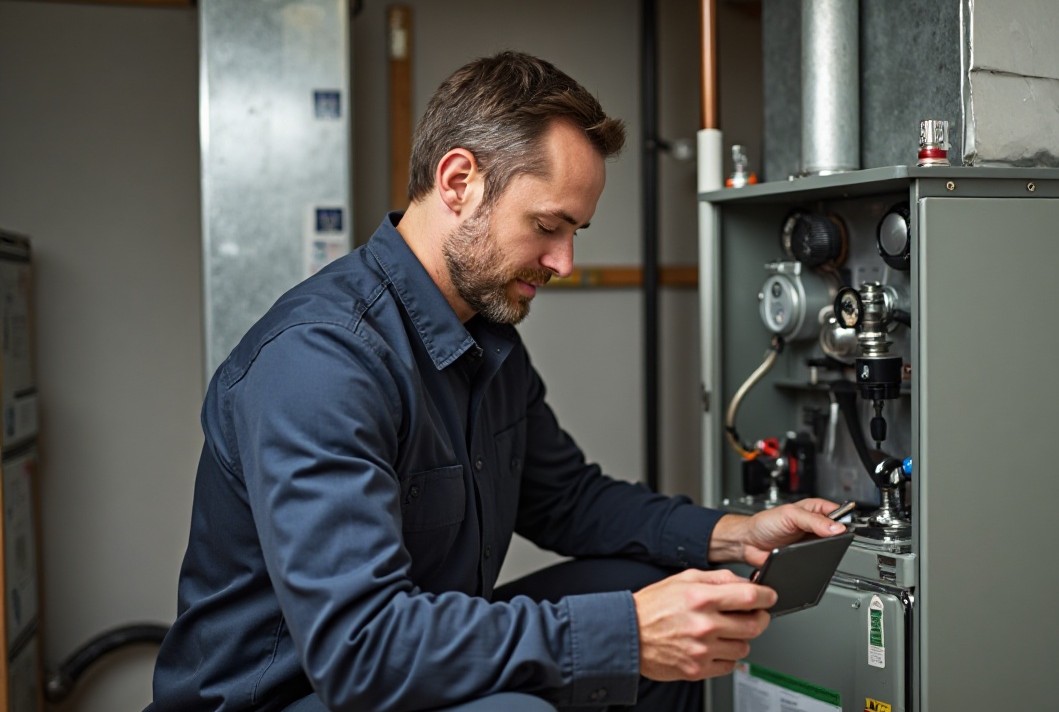
A furnace maintenance checklist should include filter replacement, thermostat checks, exhaust cleaning, duct inspections, and testing of safety features to keep your system running safely and efficiently.
Homeowners in Coachella Valley often wait until the first cold night to turn on the heat. Unfortunately, they often discover weak airflow, strange smells, or a system that won’t start. Common issues like clogged filters, worn parts, or blocked vents can cause expensive repairs and safety risks if left unchecked.
This guide outlines the key maintenance tasks for gas and electric furnaces, what professionals check during service, and when to call for help.
For professional furnace maintenance, call Anthem Air Conditioning & Plumbing at 760-895-2621. We serve Coachella, Palm Desert, and the surrounding areas.

Pre-Winter Furnace Maintenance Checklist
Preparing your furnace for winter involves a few critical tasks to ensure it performs reliably and efficiently when needed. Here’s a checklist to help you prepare.
- Inspect and Clean the Furnace’s Outdoor Unit
Before turning on your furnace for the season, check the area around the outdoor unit. Long periods of inactivity lead to clutter, debris buildup, or blocked vents – all of which affect safety and performance.
Below are a few things to look for:
- Look out for clutter: Check if any items obstruct the space around your heating system. Unlike a compressor for cooling, the furnace comes with fire, and any careless items around it could go up in flames.
- Clear debris: Prolonged inactivity leads to the accumulation of cobwebs and dust, causing the system to malfunction. You must find and clear such debris before starting your system for the fall.
- Clean the exhaust: Check the furnace exhaust pipe for blockages or carbon buildup that restricts airflow or creates safety hazards. Make sure all vents are clear and functioning properly to allow safe release of combustion gases.
- Inspect and Maintain Internal Furnace Components
Similar to the outside, dust, worn components, or poor connections inside the unit lead to short cycling, weak airflow, or even system failure. If you’re comfortable, remove the access panel to check for obvious signs of wear or buildup.
For thorough maintenance or electrical checks, it’s best to schedule a professional inspection.
- Replace or Clean Air Filters
Clogged air filters restrict airflow, forcing your furnace to work harder and use more energy. Check your filters regularly and clean or replace them every 1 to 3 months to maintain airflow and improve indoor air quality.
If you have pets, you may need to change the filter more frequently due to increased hair and dander in the air.
- Check the Thermostat
Test the thermostat’s responsiveness by reprogramming the settings for winter and observing if the furnace cycles on and off appropriately. If you’re still using a manual thermostat, consider upgrading to a programmable or smart thermostat for better energy management.
- Inspect Pilot Light and Ignition System
Examine the pilot light or ignition system to confirm it’s operating as expected. A steady blue flame indicates proper function, while yellow or flickering flames may signal an issue. Check for proper spark and promptly address any delays or failures in electronic ignition systems.
- Test Safety Features
Safety mechanisms like carbon monoxide detectors, limit switches, and pressure sensors play a vital role in protecting your home. Test these features to ensure they are functioning properly. Replace detector batteries if necessary and confirm all safety switches are operational for a secure heating system.
- Examine Ductwork
Inspect your ductwork for visible damage, leaks, or blockages that could restrict airflow or reduce heating efficiency. Seal any leaks with duct tape or mastic sealant, and remove obstructions to maintain consistent warm air distribution throughout your home.
- Ensure Proper Ventilation
Check the heater’s ventilation system to ensure all vents and flues are clear of obstructions such as debris, nests, or dirt. Proper ventilation is crucial for safely expelling harmful gases like carbon monoxide outside your home. Blocked vents can cause safety hazards and reduce your furnace’s efficiency, so addressing this step is essential.
Maintenance for Electrical Furnace
Electric furnaces use heating elements powered by electricity to warm your home. While they are efficient and safer than gas furnaces, neglecting maintenance can lead to hazards like electrical malfunctions or reduced performance. Regular care ensures reliable heating, minimizes energy costs, and reduces the risk of overheating or fire.
Key maintenance tasks for the electrical furnace:
- Inspect and clean heating elements
- Test and recalibrate the thermostat
- Check and tighten electrical connections
- Clean the blower assembly
- Replace or clean air filters
When handling an electrical furnace unit, always turn off the power to the heater at the circuit breaker before performing any maintenance. Also, avoid handling electrical components with wet hands to prevent electric shock.
If you notice frayed wires or unusual odors, contact a professional immediately.
Gas Furnace Maintenance
Gas furnaces use combustion to generate heat, which makes them highly efficient. However, they require careful handling to avoid potential risks like gas leaks, carbon monoxide exposure, or fire hazards.
Turn off the gas supply and power before attempting any maintenance task on a gas heater.
Key maintenance tasks for a gas furnace include:
- Check the pilot light or ignition system
- Inspect and clean burners
- Test for gas leaks and ensure proper ventilation
- Examine and replace air filters
- Inspect the heat exchanger for cracks or damage
Calling a professional is always the safest choice if you notice unusual noises, smells, or performance issues.
When to Call a Professional for Furnace Maintenance?
While homeowners can handle many furnace maintenance tasks, certain situations require the expertise of a professional to ensure safety and proper functionality. Calling a local HVAC technician may be suitable if you encounter any of the following issues:
- Unusual Noises: Banging, squealing, or rattling sounds could indicate mechanical problems or failing components.
- Persistent Odors: A burning smell or gas odor may signal issues with burners, wiring, or gas leaks.
- Inefficient Heating: A professional can diagnose and resolve underlying issues if your heater struggles to maintain consistent temperatures.
- Frequent Cycling: Short cycles or irregular heating cycles may result from thermostat malfunctions, clogged filters, or airflow problems.
- Visible Damage: Cracks in the heat exchanger or damaged electrical components are safety hazards that require immediate attention.
- Carbon Monoxide Alerts: If your carbon monoxide detector activates, immediately turn off your heater and call for emergency service.
What Does Professional Furnace Maintenance Include?
Below is what you can expect from a professional service:
- Comprehensive inspection of all components, including burners, heat exchangers, and blower motors.
- Cleaning and adjustment of key components to enhance performance.
- Test and calibrate the thermostat for accurate temperature control.
- Check for gas leaks and ensure proper ventilation.
- Tightening electrical connections and inspecting wiring for wear or damage.
- Replacing or cleaning air filters for optimal airflow.
- Testing safety features such as carbon monoxide detectors and limit switches.
- Lubricating moving parts to reduce wear and improve efficiency.
- Verifying proper ignition and flame quality in gas furnaces.
- Providing a detailed report and recommendations for any necessary repairs.
When Is the Best Time to Schedule Furnace Maintenance?
The ideal time for furnace maintenance is in the early fall, before temperatures drop and your heating system sees regular use. Scheduling maintenance early allows you to address potential issues before they escalate into costly repairs or disruptions during the peak heating season.
Early maintenance also gives you flexibility in booking appointments with HVAC professionals, as they tend to be less busy before the winter rush.
Tips for Getting Your Furnace Ready for Winter
While Coachella Valley winters are mild compared to other regions, residents know that desert nights can turn surprisingly chilly. Alongside regular furnace maintenance, a few small home habits can make a big difference in staying warm and comfortable through the season.
- Seal drafts and duct leaks: Check windows, doors, and duct connections for gaps where warm air escapes. A quick reseal helps your furnace work less and maintain steady comfort.
- Dress in layers indoors: Lightweight layers like cotton and wool trap warmth efficiently without needing to overheat the entire home.
- Use space heaters safely: Portable heaters offer short-term comfort but should never be left unattended. Keep them away from curtains and furniture.
- Warm beverages for instant comfort: A cup of tea, coffee, or cocoa not only boosts your body temperature but helps you enjoy those crisp Palm Springs evenings more comfortably.
These simple comfort strategies, paired with a tuned and well-maintained furnace, keep your home cozy all winter long without driving up energy costs. For personalized advice or seasonal HVAC service in Palm Springs and the greater Coachella Valley, call (760) 895-2621.
Stay Winter-Ready with Furnace Maintenance by Anthem
If DIY maintenance feels overwhelming or your heater shows signs of trouble, such as unusual noises, odors, or inconsistent heating, it’s time to contact professional HVAC contractors near you!
Anthem Air Conditioning and Plumbing provides expert furnace inspection, repair, and maintenance services to keep your heating system operating smoothly all winter. Our team in Coachella, California, is just a call away.
Dial 760-895-2621 to schedule furnace service and enjoy a warm, worry-free winter.