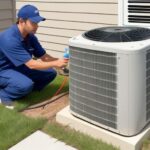

The most common air conditioner problems are cycling on and off too frequently, the AC running but not cooling, and the unit making unusual noises. Clogged air filters, refrigerant leaks, faulty electrical components, or a failing compressor can cause these issues.
To prevent these problems, our HVAC technicians at Anthem Air Conditioning & Plumbing suggest scheduling regular inspections and timely repairs. Understanding common AC issues can help you avoid costly breakdowns and keep your HVAC system running efficiently.
This guide covers the most common AC issues and ways to resolve them. If you are in Indio, CA, give us a call at 760-895-2621 for an inspection.
1. Refrigerant Leaks
A refrigerant leak occurs due to worn-out connections, corroded coils, or improper installation. This can cause your AC to blow warm air or struggle to maintain temperatures.
Signs of a refrigerant leak include weak airflow, ice buildup, or a faint hissing sound. If you suspect a leak, contact our HVAC technician near you to inspect the system, locate the source of the leak, and recharge it to the proper level.
Attempting to add refrigerant without addressing the underlying leak can lead to further damage and costly repairs.
2. Frozen Evaporator Coils
Airflow restrictions often cause frozen evaporator coils. Dirty air filters, blocked vents, or low refrigerant levels can prevent proper airflow over the evaporator coils and cause them to freeze. When this happens, your AC’s cooling efficiency is significantly reduced.
To prevent this issue:
- Replace air filters regularly to maintain proper airflow
- Keep vents and registers unblocked to allow steady air circulation
- Schedule routine maintenance to check refrigerant levels and airflow issues
If your AC is freezing up, turn it off to let the coils thaw, and give us a call at 760-895-2621 for professional service.
3. Sensor Problems
Sensor problems, such as misalignment or calibration errors, cause your AC to cool unevenly or run inefficiently. A misaligned sensor may give inaccurate temperature readings, leading to overcooling or underperformance. Calibration issues also prevent the system from responding correctly to temperature changes.
To avoid these problems, schedule regular maintenance with a nearby HVAC company to check sensor placement and accuracy.
4. Thermostat Malfunctions
A faulty thermostat is one of the most common AC problems that prevent your system from cooling the space. If the thermostat is not reading the temperature accurately or fails to send the correct signals to the AC, the system may short-cycle, run continuously, or fail to turn on at all.
According to ENERGY STAR, a malfunctioning thermostat can waste up to $180 a year in energy costs.
Common signs of a faulty thermostat include:
- The air conditioner is not responding to temperature adjustments
- The display is blank or unresponsive
- Inconsistent temperatures throughout the home
- The AC is turning on and off too frequently
- The temperature readings are inaccurate
- The settings keep changing on their own
To resolve the issue, try adjusting the thermostat settings, replacing the batteries, and confirming it’s set to “cool” mode. If the problem continues, the thermostat may need recalibration or replacement by a qualified HVAC technician.
5. Clogged Drain Lines
Dirt, dust, mold, and algae often accumulate in the drain line, creating blockages and preventing water from draining. This leads to higher humidity levels, poor cooling performance, and even water damage.
To prevent clogged drain lines:
- Flush the drain line regularly with a mixture of water and vinegar to remove buildup
- Check for clogs and standing water near the drain pan
If a stubborn clog persists, contact a professional to safely clear the blockage and prevent further damage.
6. Dirty Air Filters
Clogged or dirty air filters restrict air flow, forcing your AC to work harder and reducing cooling efficiency. This leads to higher energy bills, uneven cooling, and poor indoor air quality.
According to the U.S. Department of Energy, replacing a dirty filter with a clean one can reduce your air conditioner’s energy consumption by up to 20%.
To prevent this issue:
- Replace AC filters every 1-3 months, depending on usage
- Use high-quality filters to trap dust, allergens, and pollutants
- Schedule routine maintenance to ensure filters are clean and functioning properly
A clean air filter will help your HVAC system run smoothly and improve air quality.
7. Electrical Control Failures in the AC System
Over time, electrical components of the air conditioner, such as capacitors, relays, contactors, and wiring, can wear out or fail. If any of these components malfunction, the system may fail to start, short-cycle, or stop cooling.
Common signs of electrical issues include:
- AC not turning on or randomly shutting off
- Clicking, buzzing, or humming sounds from the outdoor unit
- Frequently tripped circuit breakers
- The fan or compressor not running despite the system being on
Since electrical repairs involve handling high-voltage components, it’s best to call an HVAC technician to inspect and replace worn-out wiring before it leads to a complete system failure.
8. Faulty AC Compressor
The AC compressor circulates refrigerant and maintains the cooling cycle. If the compressor fails, the entire system will struggle to function, leading to poor cooling performance or complete system failure.
Signs of a faulty air conditioner compressor include:
- Warm air blowing from vents even when the system is running
- Loud noises such as clicking, rattling, or buzzing from the outdoor unit
- Frequent system shutdowns or failure to start
- High energy bills due to the system working harder to compensate
A compressor is one of the common AC parts that fail due to a lack of maintenance, overheating, or low refrigerant levels. Since compressor repairs can be expensive, consulting an HVAC professional to determine whether repair or full system replacement is the best option.
How to Prevent Common Air Conditioning Problems
Below are tips to prevent common AC problems:
- Replace air filters every 1-3 months.
- Keep the condenser unit clean and free of debris, dirt, and leaves to allow proper heat dissipation.
- Schedule annual HVAC maintenance with a certified technician to inspect for refrigerant leaks, electrical issues, and worn-out parts before they cause major AC issues.
- Check that the thermostat setting is correctly set to “cool” mode and calibrated for accurate temperature readings.
- Inspect and clean evaporator and condenser coils.
- Keep vents and ducts unobstructed.
- Monitor refrigerant levels and call a licensed HVAC company to repair leaks promptly.
- Listen for unusual sounds like clicking, buzzing, or rattling that indicate loose or failing components in the air conditioning unit.
Common AC Problems: What You Can Fix and When to Call a Pro
| Symptom | Likely Cause | Safe DIY | When to Call |
| Running, not cooling | Dirty filter, frozen coil, low refrigerant, failed capacitor | Replace filter, thaw coil (system off), clear supply/return vents | Refrigerant circuit, electrical (capacitor/contactor), coil clean |
| Short cycling | Thermostat placement, dirty coil, weak capacitor, high static | Move heat sources away from stat, check filter/vents | Electrical tests, static pressure & coil cleaning |
| Water at air handler | Clogged condensate line/pan, iced coil melt-off | Wet/dry vac at drain, flush with vinegar, replace filter | Recurring clogs, float switch trips, pan cracks |
| Weak airflow | Dirty filter, matted coil, duct leak/kink, failing blower | Filter change, open all vents, remove obstructions | Duct repairs, coil clean, blower diagnosis |
| Odd noises (buzz/rattle) | Loose panel, failing capacitor/contactor, fan issues | Tighten access panel screws only | Electrical and motor checks required |
Call Us Now for Air Conditioning Repair and Maintenance
Regular maintenance helps prevent common air conditioner problems, but a professional repair may be needed if your system struggles to cool, runs in short cycles, or makes unusual noises. If your AC is not blowing cold air, call us for a professional inspection and repair service to restore your system’s performance.
At Anthem Air Conditioning and Plumbing, our certified technicians with direct factory training are just a call away. We handle all problems with your HVAC system. We are committed to transparency and clear, upfront pricing, so you always know what to expect – no hidden fees or surprises. With our 100% satisfaction guarantee, you can trust that your AC repair or maintenance service will be done right the first time.
Call 760-895-2621 to schedule an AC inspection.
Frequently Asked Questions
What is the most common AC repair?
The most common AC problem is restricted airflow due to clogged air filters, dirty coils, or blocked vents. Poor airflow reduces cooling efficiency, forces the system to work harder, and can lead to frozen evaporator coils or compressor failure.
Why is my air conditioner running but not blowing cold air?
Low refrigerant levels, a dirty air filter, thermostat issues, or a frozen evaporator coil can cause the air conditioner to run without cooling. Start by checking the air filter and thermostat settings. If the issue persists, professional AC service may be required to inspect refrigerant levels or diagnose a failing compressor.
What is the lifespan of an AC filter?
The lifespan of an AC air filter depends on usage and indoor air quality. A standard filter should be replaced every 1–3 months, while high-efficiency or HEPA filters can last up to 6 months. Homes with pets, allergies, or high dust levels may need more frequent replacements.
What is the most expensive part of the AC unit to fix?
The compressor is the most expensive AC component to repair or replace, typically costing $1,200–$2,500+, depending on the unit type. Since the compressor is the heart of the cooling system, failure often requires replacing the entire unit, especially if the AC is older.
How often should I schedule professional AC maintenance?
Professional AC maintenance should be scheduled twice a year, ideally in the spring and fall. If you notice reduced airflow, unusual noises, or inconsistent cooling, servicing your system promptly can help prevent unexpected breakdowns.
What can I do to improve AC energy efficiency?
To boost AC energy efficiency, set your thermostat to an optimal temperature, upgrade insulation, and seal any air leaks. Regularly replacing filters and ensuring vents remain unblocked can also help reduce energy consumption.
How do I choose the right size AC unit for my home?
The right AC size depends on square footage, insulation, and climate conditions. An oversized or undersized unit can lead to inefficiency and higher energy costs, so professional load calculations are recommended for proper sizing.
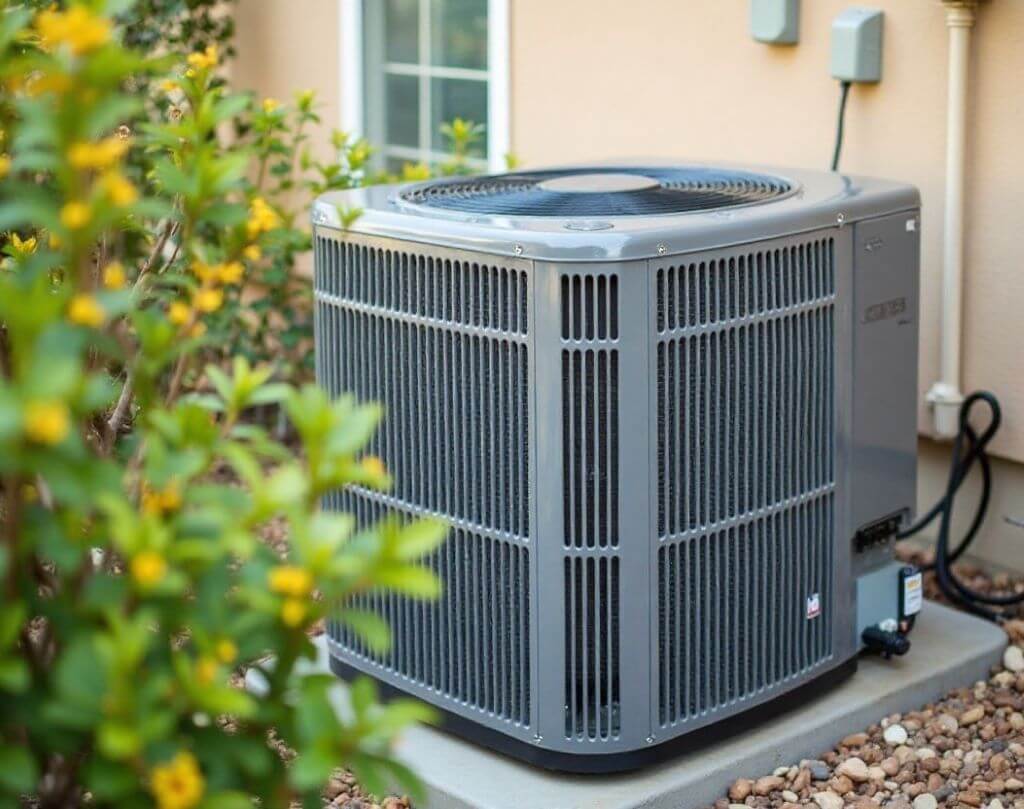
Can plants around my outdoor unit affect its performance?
Plants and other obstructions can restrict airflow and cause your AC to overheat. Keep at least two feet of clearance around the outdoor unit to maintain proper ventilation and prevent strain on the system.
Are there any DIY tips for extending the lifespan of my AC system?
You can extend your AC’s lifespan by changing filters regularly, keeping the outdoor unit clean, and optimizing thermostat settings. Scheduling routine maintenance and addressing minor issues early can also help prevent costly repairs.